
Microcore has more than two decades of experiences in research, manufacturing and scale up of many Nutrabioceuticals and Therapeutics. Our new innovations helps us to develop unique and GRAS Green enzyme technologies for the purification of Collagen type V from Egg Shell Membrane.
Collagen Type V from Egg Membrane is a specialized fibrillar collagen that plays a critical regulatory role in connective tissue organization. Though present in smaller quantities compared to Types I and III, it is essential for proper fibril formation, structural integrity, and tissue remodeling.
Egg membrane is a rich natural source of Type V collagen along with bioactive proteins, making it valuable for nutraceutical and dermaceutical applications. Collagen Type V supports skin firmness, wound repair, and extracellular matrix stability by regulating the diameter and assembly of collagen fibrils, making it particularly suitable for hair follicle support.
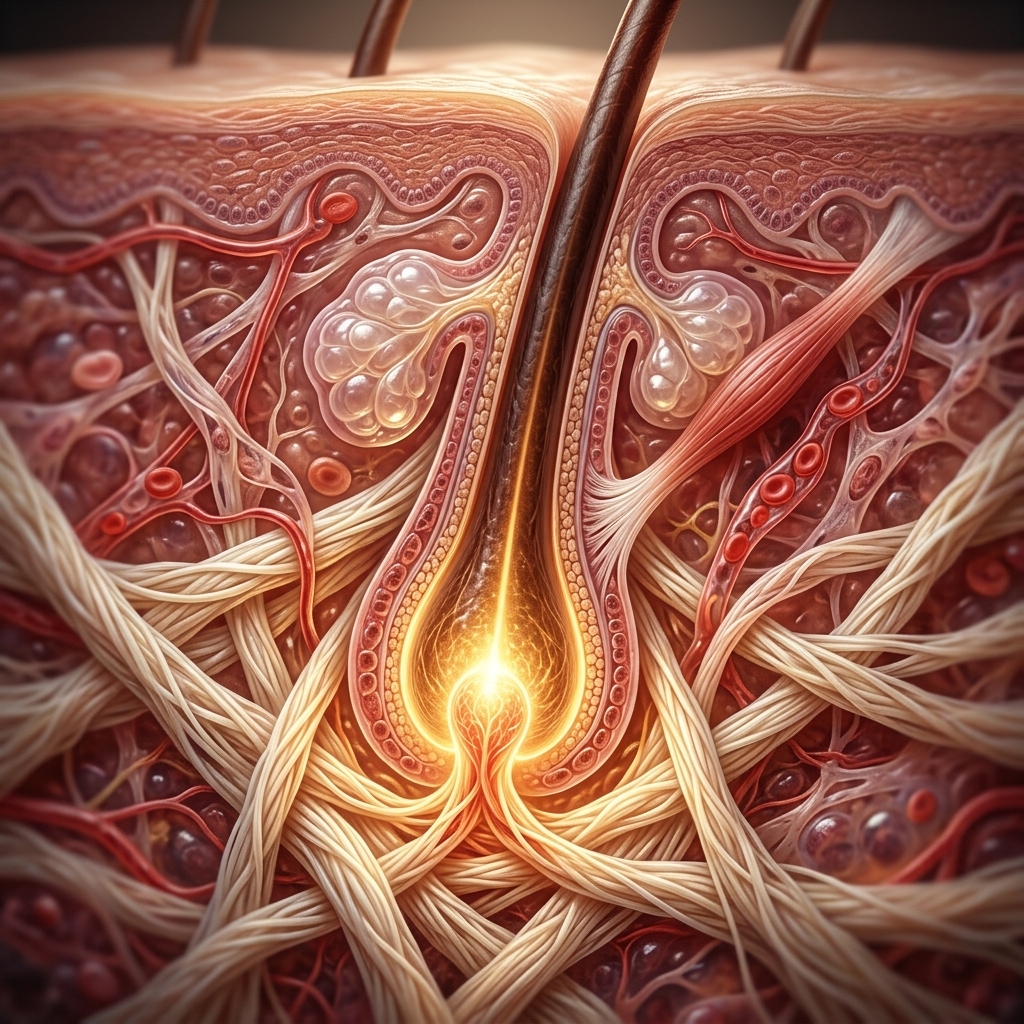
Collagen Type V from Egg Membrane supports hair health by contributing to the structural organization of the hair follicle extracellular matrix (ECM). It is used in formulations like "hair placenta" concepts—products designed to nourish and activate follicular activity, improve hair strength, reduce breakage, and support regenerative processes around the follicular base.
The developments are at lab scale and expected to complete clinical studies and further launch by 2028.