

Research and Development (R&D) plays a crucial role in Microcore's vision and strategy since its incorporation in 2007. R&D is stated as a fundamental part of Microcore's vision and strategy right from its inception in 2007. This implies that the company places a strong emphasis on innovation and staying at the forefront of technological advancements in biotechnology. Microcore leverages its expertise in biotechnology to create novel processes and develop new molecules specifically in the field of nutraceuticals. This suggests a focus on health and wellness products derived from natural sources.Microcore highlights its commitment to continuous investment in R&D. This ongoing investment is crucial for staying ahead of the curve, adapting to industry changes, and ensuring the development of cutting-edge solutions. Innovative Processes, Products, Technologies, and IPR: The outcome of Microcore's R&D efforts includes the development of innovative processes, products, technologies, and Intellectual Property Rights (IPR). This suggests a holistic approach to innovation, covering various aspects that contribute to the company's success and differentiation in the market. Microcore's commitment to R&D, coupled with its focus on biotechnology and nutraceuticals, positions the company as a forward-thinking and innovative player in its industry. Continuous investment in R&D reflects a dedication to staying competitive and leading the way in the development of new solutions and technologies.

In-house R&D has been recognized by the
Department of Scientific and Industrial Research (DSIR) in
the Government of India. This acknowledgment reflects the
quality and significance of your research efforts. Your
approach of defining core competencies aligned with major
technology platforms, especially in the field of
Nutraceuticals, showcases a strategic focus. Being able to
apply these competencies to product development, process
technologies, and scale-up indicates a comprehensive
approach to innovation. The S2B (Science to Business) and B2S
(Business to Science) approach you've mentioned is an
effective strategy. Transitioning knowledge and insights
from scientific research to practical business applications
and vice versa helps bridge the gap between theoretical
advancements and market demands. This not only demonstrates
a strong understanding of market dynamics but also positions
your organization well to meet industry needs.
R&d - Pipeline Molecules
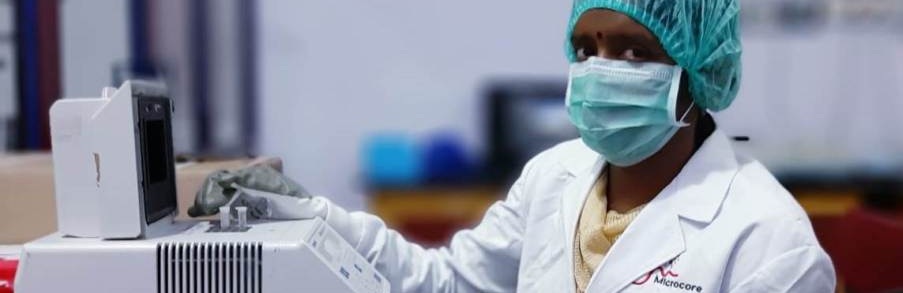
Microcore's multi-disciplinary team, including scientists, engineers and business development professionals, have an outstanding track record in turning science into commercially attractive, nutritional solutions, constantly enriching our unique cluster of technology and expertise. Some of our pipeline product includes
 Products


 High PDAACS protein from Fried Bengal Gram
Vitamin K27 from fermented Fried Bengal Gram
Medium-chain triglycerides (MCTs)
from fermented Coconut oil
Fermented Turmeric
Soluble Dietary Fiber from
BG Husk
Flavorozyme
Anthocyanian from Red Cabbage
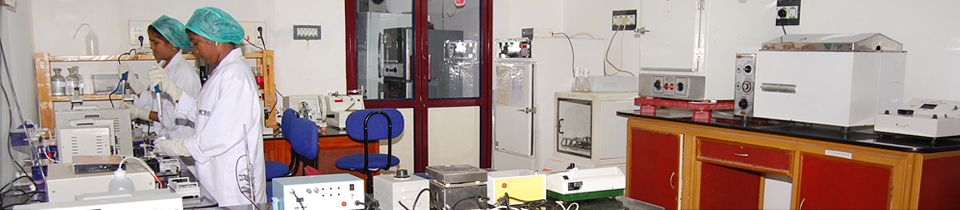
Discovery Research
Microcore has a robust focus on microbial research and
development, particularly in the field of microbiome
modulators and their applications in preventing and managing
chronic lifestyle diseases. Your proprietary collection of
over 3000 micro-organisms, along with a strain and molecule
database for probiotics, enzymes, and biotransformation,
highlights a comprehensive approach to discovering and
screening microbial strains. The emphasis on classical
mutation and molecular biology as core competencies for
strain and yield development suggests a sophisticated
understanding of genetic and molecular mechanisms. This
foundation likely plays a crucial role in Microcore's
ability to identify and develop microbial strains,
compounds, and formulations for use in food ingredients,
supplements, and active compounds with potential health
benefits.Your focus on chronic lifestyle diseases such as
obesity, hypercholesterolemia, lipid profiles, urea, uric
acid, and diabetes indicates a commitment to addressing
major health challenges. The established pipeline of
microbiome modulators suggests ongoing efforts to advance
research and development in this area, potentially leading
to innovative solutions for improving human physiology and
overall health.Microcore is actively engaged in cutting-edge
research and development, leveraging a combination of
traditional microbiology techniques and molecular biology
advancements to contribute to the prevention and management
of chronic diseases.
Microcore's Leuconostoc mesenteroides sub species
idlies
Next-generation probiotic that aids soft and nutritious idli
fermentation.
Microcore's Lactobacillus sweeticus
Produces fruity aroma (pine apple and jack fruit flavor)
flavoring agents in food preparations.
Next-generation probiotic that aids soft and nutritious idli
fermentation.
Microcore's Lactobacillus plantarum
Next-generation probiotic that aids elements of
cardiovascular and well being. Its outstanding ability to
modulate bile acid metabolism is beneficial for heart health
factors such as high blood pressure and high cholesterol, as
well as other processes from liver function to glucose
regulation and vitamin metabolism.
Microcore's Lactobacillus fermentum
Boosts production of the major cellular antioxidant
glutathione.
Microcore's Lactobacillus helveticus
Works for bone health (prevention of osteoporosis), sport
nutrition, or dental health. Suitable for use in food
supplement form, or as fermentation starter for functional
dairy products. It stimulates absorption and transport of
calcium by intestinal cells, and favors its assimilation by
the organism. It can be used for several applications
including bone health (prevention of osteoporosis), sport
nutrition, or dental health.
Journals & Publications
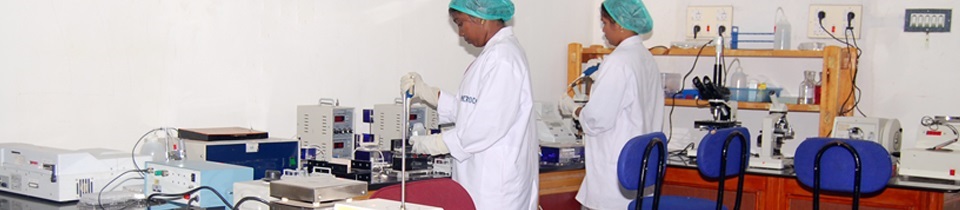
Medical-Journals
1. A randomized, open‑label, multicentered parallel‑group clinical study to evaluate the efficacy and safety of Joint Core® compared to Jointace DN® in osteoarthritis patients 2022 Journal of Current Research in Scientific Medicine | Published by Wolters Kluwer Medknow jcrsm_21_22_R2_OA 10.4103/jcrsm.jcrsm_21_22 |
2."COMPARATIVE EVALUATION OF BIOAVAILABILITY, EFFICACY AND
SAFETY OF MICROCORE NESC®
WITH CALCIUM CARBONATE AND CALCIUM CITRATE MALATE IN
OSTEOPENIC AND OSTEOPOROTIC PATIENTS - A RANDOMIZED CLINICAL
TRIAL", has been accepted for publication in Indian Journal
of Orthopaedics. Indian Journal of Orthopaedics Received: 29
November 2023 / Accepted: 30 January 2024
Indian Orthopaedics Association 2024
www.eggcalcium.com |
https://link.springer.com/article/10.1007/s43465-024-01117-3
3. Journal of Dermatology Research Reviews & Reports TRICHOVITALS OVERVIEW, HAIR| SKIN| NAIL -Wellness
https://www.srcscholarsmedia.com/powerpoint-prasentations.php
https://www.srcscholarsmedia.com/ppt-article/trichovitals-overview-hair-skin-nail-wellness-52.html
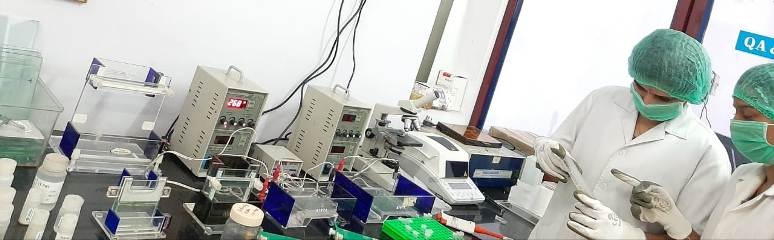
Biotech-Journals
1.Evaluation of TRICHONEM TM as Anti-Dandruff and Hair growth promoter in young adults - Research J. Topical and Cosmetic Sci. 13(2): July - December, 2022
2.Evaluation of NEMBUTY TM for
Anti-wrinkling, Anti-ageing and Moisturizing Face Pack for
Various Skins - Dermatology and Dermatitis {approved under
press}
3.Effects on Oral Supplementation of Nutraceuticals formulations- Trichovitals TM in young adults for healthy maintenance of hair growth. Research Journal of Topical and Cosmetic Sciences (RJTCS) Vol. 13 Issue 1, January - June 2022.
4. Effects of Oral Supplementation of Muttaijow complexTM on Human Skin, Hair and Nail
Physiology. Research Journal of Topical and Cosmetic Sciences
Vol. 12 | Issue-01|January - June | 2021
5.Effects of Oral Supplementation of Human TrichovitalsTM
Skin, Hair and Nail Physiology Research Journal of Topical
and Cosmetic Sciences Vol. 12 | Issue-01|January - June |
2021
6. Bioactive molecule composition of natural egg membrane
concentrate (NEMC TM ) vs. soluble egg membrane (SEM)
International Journal of Biotechnology & Biochemistry (IJBB)
ISSN 0973-2691 Volume 16, Number 1 (2020) pp. 25
7. Water Insoluble Hydro-Albumen Gel
Crystals From Raw Egg And Its Albumen Application :
71760-IJABR
8. Enzymatic Methods To Produce Residue Free Sago For High Gell Foods And Process Thereof : 71761-IJAFST
9. Recovery Of Albumin And Yolk Contents From Waste Of Raw
Egg Processing : 71762-IJBB
10. Roasted Bengal Gram Protein For Low Molecular Mass With
High Solubility And Digestibility : 71763-IJABB
11. Shake Flask Studies On Ethanol Production From Hydrolyze Bagasse And Egg Albumin Waste By Using Enzymes And Chemicals
: 71766 - IJABB
12. Garlic Peel And Hsuk As A Potential Source Of Insoluble
Dietary Fibers For High Hydrophilic And Liphophilic
Activity:- Paper Code #: Rip - 71767 - IJAFST
13. Screening and processing industrial agro wastes for
insoluble dietary fibers and microcrystalline cellulose.
International Journal of Agriculture and Food Science
Technology. ISSN 2249-3050 Volume 11, Number 1 (2020), pp.
1-16
14. Ozone modified starch and its application in yarn sizing
and advantages. International Journal of Chemistry and
Applications. ISSN 0974-3111 Volume 12, Number 1 (2020), pp.
1-11
15. Isolation and Extraction of Curcumin from Three Different
Varieties of Curcuma longa - A Comparative Study.
International Journal of Pharmaceutical Research Allied
Sciences. Volume 4, Issue 2 (2015):79 -84
16. Production of ω-3-Docosahexanoic Acid (DHA) by Using
Oleaginous Marine Algae International Journal of Applied
Biotechnology and Biochemistry. ISSN 2248-9886 Volume 4,
Number 1 (2014) pp. 15-24
17. Miniaturized Screening and Isolation of Phospholipase A2
Rhizopus by using egg yolk substrate. International Journal
of Applied Biotechnology and Biochemistry (IJABB) ISSN
2248-9886 Volume 3,Number 1(2013) pp. 83-96
18. Production of Fruity Aroma by Non Lactose Fermenting
Lacto bacilli Species Isolated from South India Hills.
International Journal of Applied Biotechnology and
Biochemistry Volume 2, Number 4 (2012) pp. 319-326
19. Conversion of egg shell waste in to dicalcium phosphate.
Global Journal of Biotechnology and Biochemistry Research (GJBBR).
ISSN 2248-9894 Volume 2, Number 1 (2012), pp. 11-16
20. Miniaturized screening and isolation of Oleaginous fungi
from low temperature environment. International Journal of
Advanced Biotechnology Research (IJABR). ISSN 2249-3166
Volume 2, Number 1 (2012), pp. 29-34
21. In Vitro Cytotoxic Effects of Muntingia Calabura Linn.
Fruits against Human Cancer Cell Lines, International
Journal of Biotechnology and Biochemistry. Volume 7 Number 3
(2011) pp. 379-384
22. Phytochemical Studies on Muntingia Calabura L. Fruits
from Tamil Nadu, India. International Journal of
Biotechnology and Biochemistry. Volume 7 Number 3 (2011) pp.
311-320
23. Hepatoprotective Effect of Muntingia Calabura Fruit
Extracts Against Paracetamol Induced Oxidative Stress in
Wistar Albino Rats. International Journal of Biotechnology
and Bioengineering Research. Volume 2 Number 1 (2011) pp.
21-27
24. Recycling Organic Waste and Composting at Direct
Plantain Field for the cost effective production of biofertilizer and application studies at Tiruchirapalli
District of South India. International Journal of Applied
Agricultural Research. Volume 5 Number 3 (2010) pp. 337-342
25. Effective Utilization of Tapioca Fiber Wastes to Improve
Methane Production. International Journal of Applied
Environmental Sciences, Volume 5, Number 3 (2010), pp.
327-330
26. Study of Diacyl Glycerides Profile and Content in
Cooking Oils using Thin Layer Chromatography and Gel
Permeation Chromatography. International Journal of
Biochemistry and Biotechnology (IJBB) Volume 6, Number 1
(2010), pp. 35 -44
27. Optimizing Dosage of Organic Fertilizer Fermented Fish
Liquid Protein Hydrolysate for Eradication of Stunted Growth
in Paddy Cultivation and Yield Improvement. International
Journal of Applied Agricultural Research (IJAAR), Volume 4,
Number 3 (2009), pp. 222-229
28. Field Studies of Paddy Cultivation using Organic
Fertilizer produced from Fish-Protein Hydrolysate.
International Journal of Applied Agricultural Research (IJAAR),
Volume 4, Number 1 (2009), pp. 29-35
29. Screening and Purification of Agro-Processing Wastes for
the Production of Dietary Fibers. Poster presentation 20th
Indian Convention of Food Scientist and Technologists (ICFOST
2009). Receipt of best poster award at ICFOST 2009
Acknowledgement
1. Formulation, characterization and antibacterial activity evaluation of collagen based Silver nanoparticle, International Journal of Pharmaceutical Science and Research. IJPSR 2020 Volume 11 (4), 1735-1739